What it covers
Prosthetics begins where restorative dentistry can no longer help: when not enough of the tooth is left to hold a filling, or when there is no tooth at all. It divides into fixed work, which is cemented and not removed, and removable work, which the patient takes out.
Fixed work covers crowns and bridges; removable covers full, partial and cast dentures. Between them sit replacements on implants, which combine features of both.
Crowns
A crown covers the whole tooth and takes over chewing for it. It is made when a tooth is badly broken down, after root canal treatment, or when it has cracked. The tooth is prepared, an impression is taken, and you wear a temporary crown until the final one is made.
A metal-ceramic crown has a metal core and a ceramic facing. A metal-free one, zirconium included, has no metal, so light passes through it closer to the way it passes through a natural tooth — most visibly on front teeth. We have written about the differences in the articles on porcelain and zirconium crowns.
Bridges
A bridge replaces a missing tooth by resting on the neighbouring teeth, which are prepared for it. The advantage is that it is fixed and that getting used to it takes a few days. The price depends on the number of units, so it is calculated per crown.
The condition is that the neighbouring teeth can carry the load. When they cannot, or when several teeth in a row are missing, we look at a denture or an implant.
Dentures
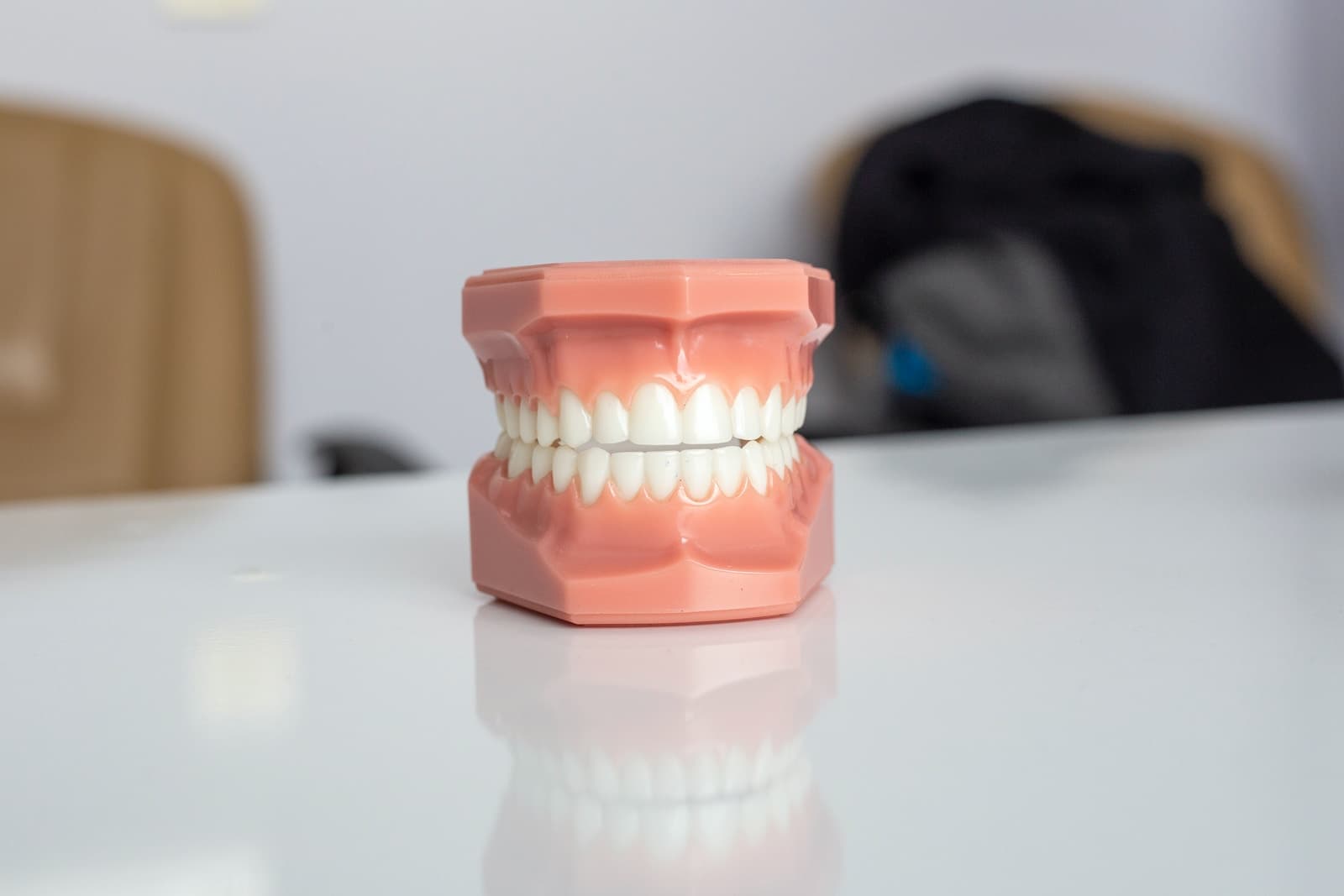
A full denture replaces all the teeth in a jaw; a partial one replaces some of them and rests on the remaining teeth with clasps. A cast denture has a metal base, is thinner and more stable than a classic partial, and with attachments the clasps are not visible from outside.
A silicone, Valplast denture is flexible and metal-free. Every denture needs a period of getting used to it in speech and chewing, and in time relining as well, because the bone underneath changes.
Replacements on implants
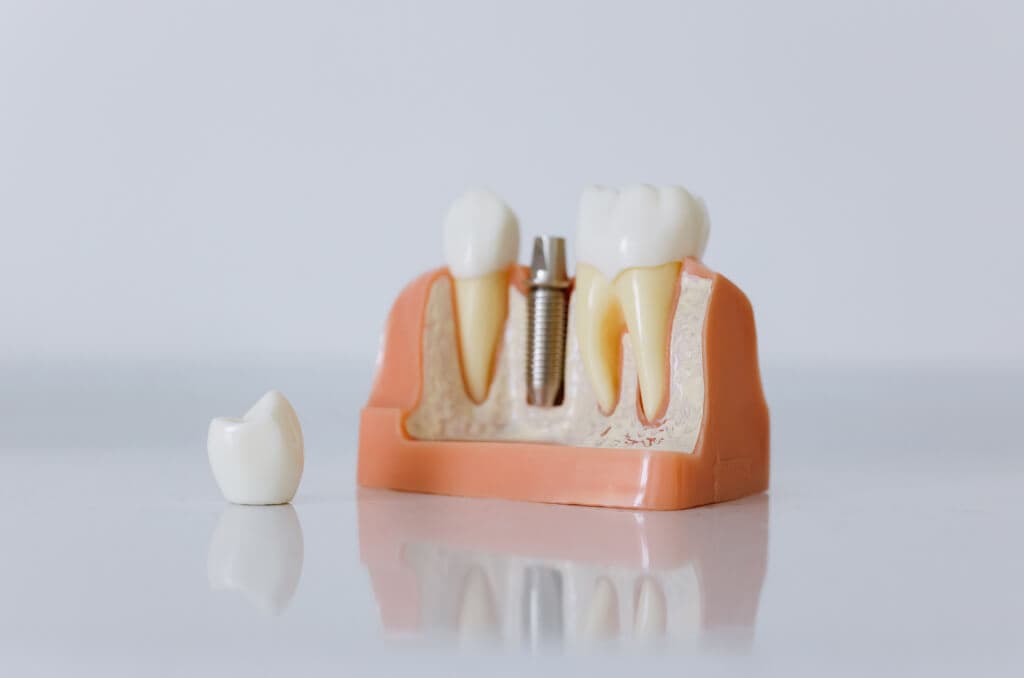
When a tooth is replaced on an implant, the neighbouring teeth are not prepared. The crown is fitted to the implant by cement or by screw; both are in the price list. The precondition is enough bone and healthy gums, assessed on the X-ray.
How the work goes
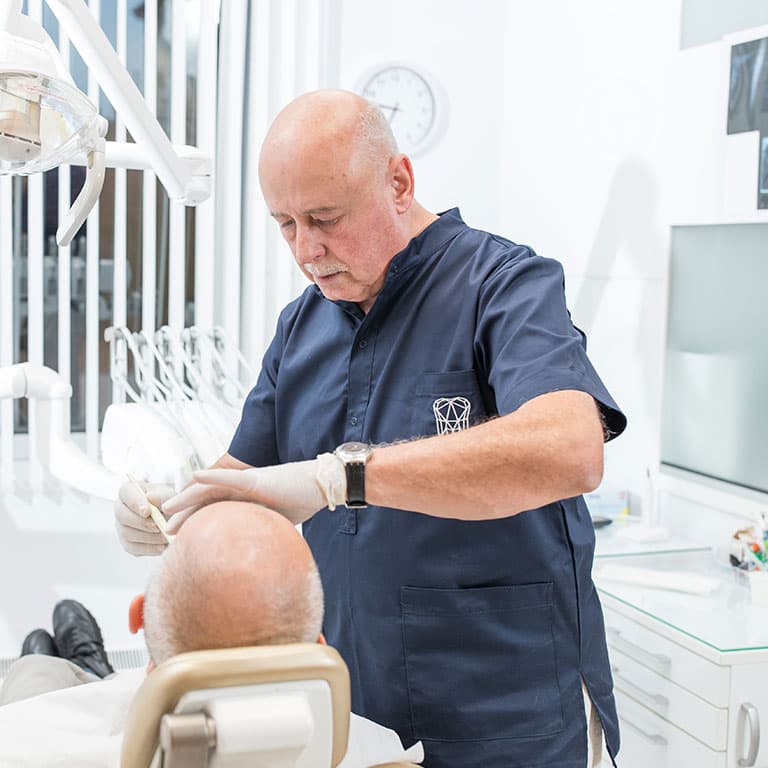
The first appointment is an examination and a plan: what is missing, what can be saved, which solutions are possible and what each costs. Then come preparation of the teeth and the impression, a try-in, and the final fitting.
Between appointments the work is in the laboratory, so visits are spaced out. For larger work expect several visits over a few weeks.
Looking after it
Crowns and bridges are brushed like the other teeth, with particular attention to the edge against the gum and to the space under a bridge unit, where an interdental brush or special floss goes. A denture is taken out and cleaned after eating, and as a rule left out of the mouth at night.
A check-up once a year looks at both the restoration and the tissue beneath it. Most problems in prosthetics start quietly, at the edge of a crown or under a denture.
Price
Crowns, bridges, dentures, relining and repairs are in the “Prosthetics” group of the price list. Since the price is calculated per crown or per piece of work, the total depends on the plan — and you get that plan in writing before anything starts.
- How long does making a crown take?
- Usually several visits over two to three weeks, with a temporary crown in the meantime. The timing depends on the laboratory and on the extent of the work.
- Which is better, a bridge or an implant?
- It depends on the state of the neighbouring teeth and the bone. A bridge is quicker and needs no surgery, but requires preparing the neighbouring teeth. An implant spares them but needs bone and a longer course of treatment. The decision is made after an X-ray.
- How long does a denture last?
- The denture itself lasts a long time, but the bone underneath changes, so relining becomes necessary in time. That is routine maintenance, not a fault.
- Can you tell a crown is not a natural tooth?
- The aim is that you cannot, and metal-free crowns behave closer to a natural tooth here. How close depends on the colour of the neighbouring teeth and the position in the smile.