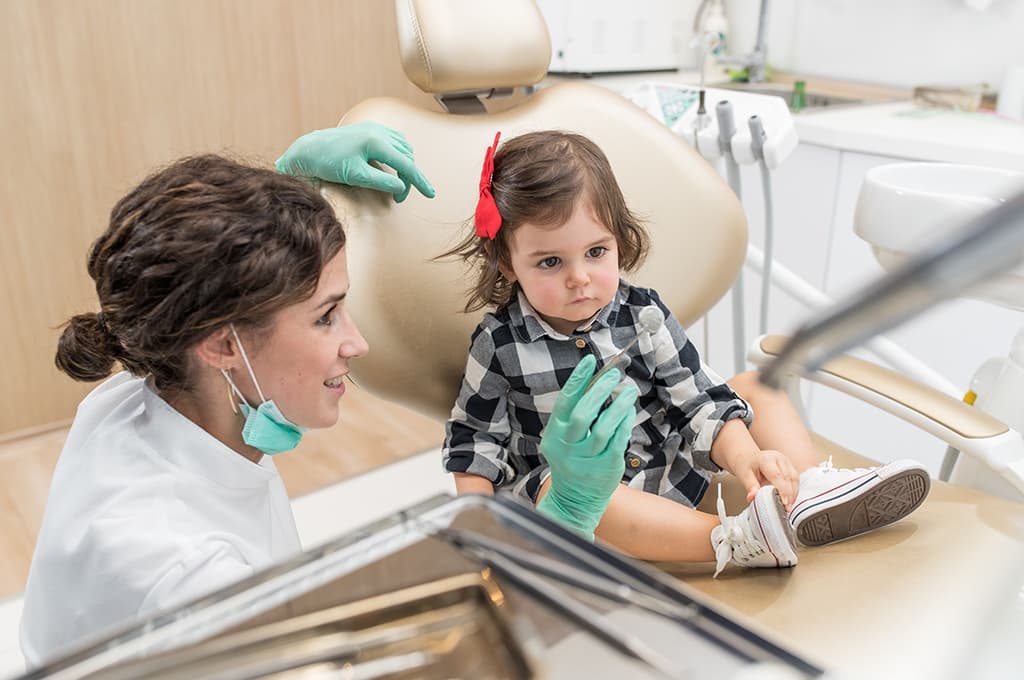
The first visit
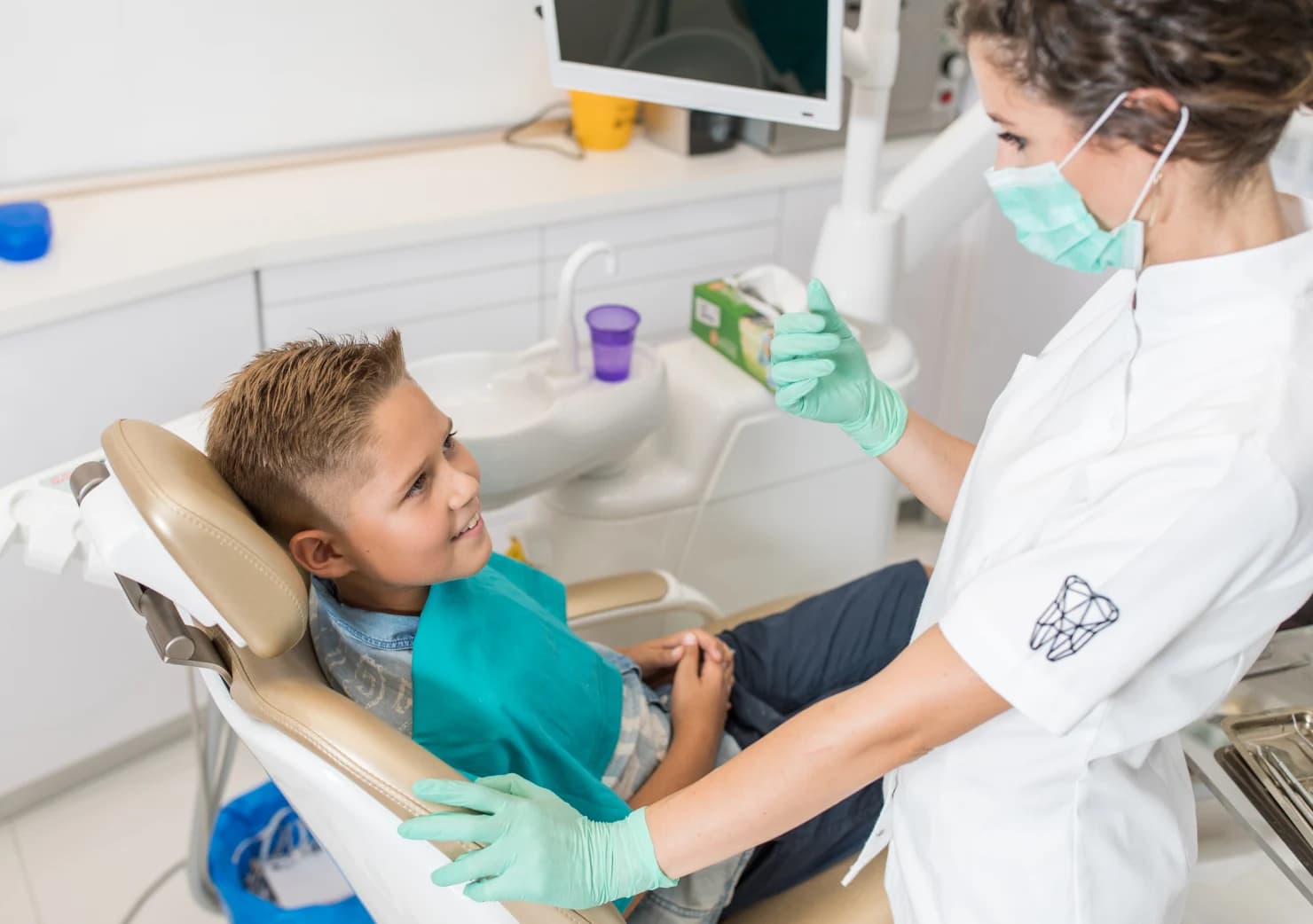
We recommend a first check-up early, while there is still no problem: the visit is short, nothing is done, and the child gets to know the practice by having their teeth counted. If the first visit happens because of pain, everything is harder — for the child and for us.
A parent or guardian comes with the child, stays in the room and gives consent for the examination and treatment. How to prepare a child at home, what to say and what not to, we have described in a separate article.
What we do
- An examination and an assessment of the risk of decay.
- Fluoride applied as a gel or solution, to protect the enamel.
- Fissure sealing: filling the grooves on the biting surface of a newly erupted tooth.
- Fillings in baby teeth, including glass ionomer.
- Extraction of a baby tooth when its time has come or when it cannot be saved.
- Treatment of soft-tissue conditions in the mouth in children.
Why baby teeth are treated
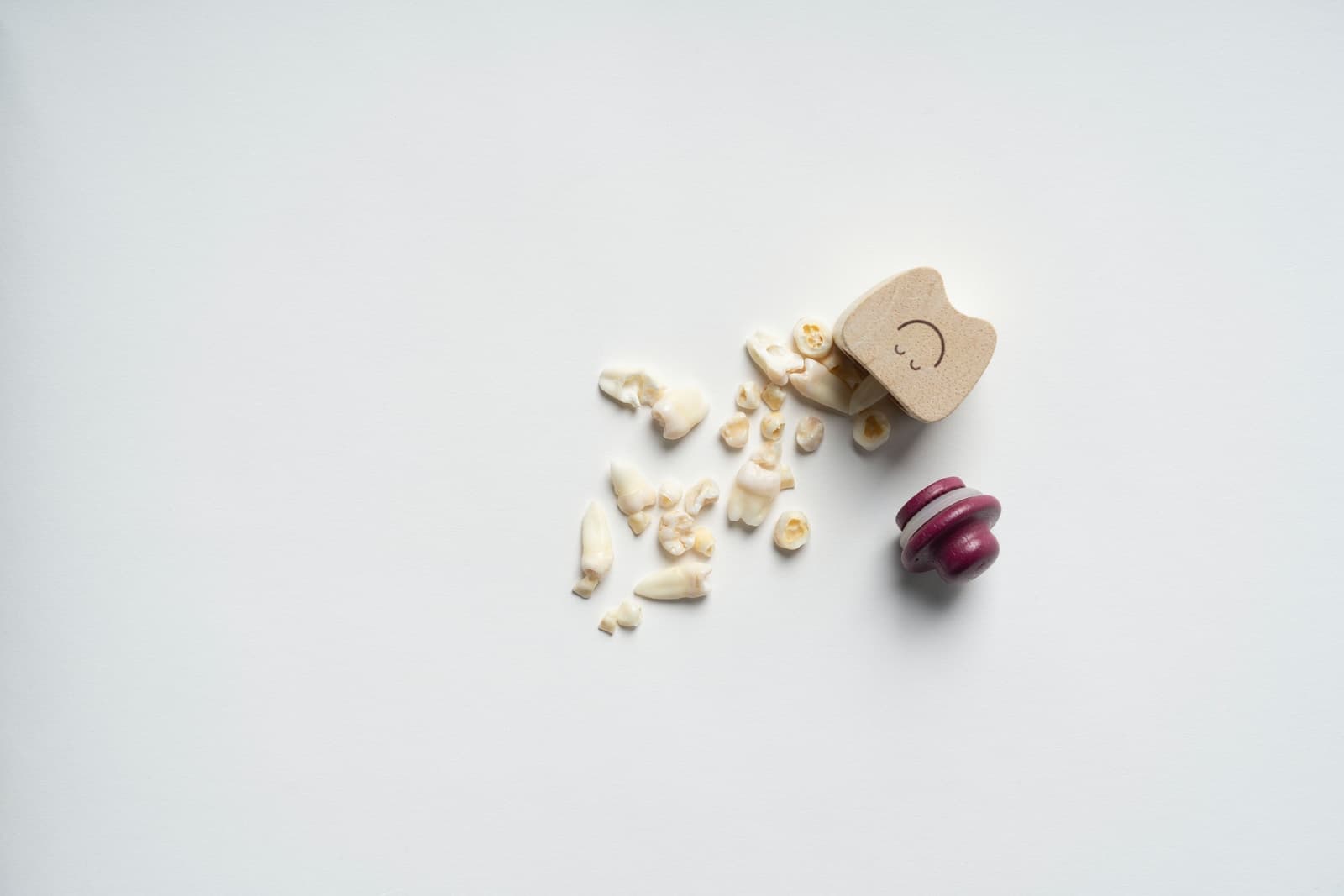
A baby tooth is not temporary in the sense of being unimportant. It holds the place for the permanent tooth, takes part in chewing and speech, and infection at its root can threaten the permanent tooth bud underneath. So a baby tooth is treated, and pulled only when there is no other way.
When a baby tooth is lost too early the space narrows and the permanent tooth later comes through crowded. That is a common reason for orthodontic treatment further down the line.
Fissure sealing and fluoride
Fissures are the grooves on the biting surface of a molar. Food collects in them and a brush does not reach the bottom. Sealing fills them with a thin layer of material, without drilling and without anaesthetic, and takes a few minutes per tooth.
Fluoride strengthens the enamel and is applied in the practice at intervals the dentist sets according to that child’s risk. Neither replaces brushing; they are additions, not shortcuts.
What the visit is like
We keep the appointment short and at a time of day when the child is neither tired nor hungry. We explain what we are going to do before we do it, and show the instrument before using it. If the child cannot manage that day, we do not push — coming back is better than creating a fear that lasts for years.
It helps if a parent does not promise that it will not hurt and does not talk about their own bad experiences in front of the child. Children who arrive without a picture already formed get through the first check-up most easily.
At home
- Brushing twice a day, the evening one always last thing before bed.
- Until the child masters the movement, a parent goes over the teeth afterwards.
- Fluoride toothpaste in the amount the dentist recommends for that age.
- Sweets with a meal, not between meals — how often matters more than how much.
- No sweet drinks in a bottle before sleep.
Price
Fluoride treatment, fissure sealing per tooth, fillings in baby teeth and extraction of a baby tooth are in the “Children’s and preventive dentistry” group of the price list.
- How early should a child be brought in?
- The recommendation is a first check-up at an early age, before a problem appears. Confirm the exact age with us by phone.
- Does a parent stay with the child?
- Yes. A parent or guardian is in the room during the examination and gives consent for treatment.
- Is a baby tooth with decay always pulled?
- No. It is usually treated, because it holds the place for the permanent tooth. It is pulled when it cannot be saved or when the time has come for it to be replaced.
- My child is frightened. What should I do?
- Tell us beforehand, before you come in. We then plan the first appointment as an introduction, with nothing done.