Fixed braces are the surest route to a good-looking smile and a healthy, functional bite. They are also the best way of straightening teeth in youth, and one of the better decisions anyone can make for the health of their teeth.
Most people need braces at some point in life to align their teeth properly. Patients with larger problems or more marked irregularities often take the step later, once the irregularity has become too great. Fixed braces can align teeth considerably faster, particularly earlier in life.
What are fixed braces?
Fixed braces are an orthodontic appliance that applies orthodontic force to the teeth, moving them into the correct position. There are many such appliances, differing in purpose and construction, but they divide broadly into fixed and removable.
Which appliance is chosen depends on age, the particular case, the irregularity and what can realistically be corrected. The choice is the orthodontist's judgement.
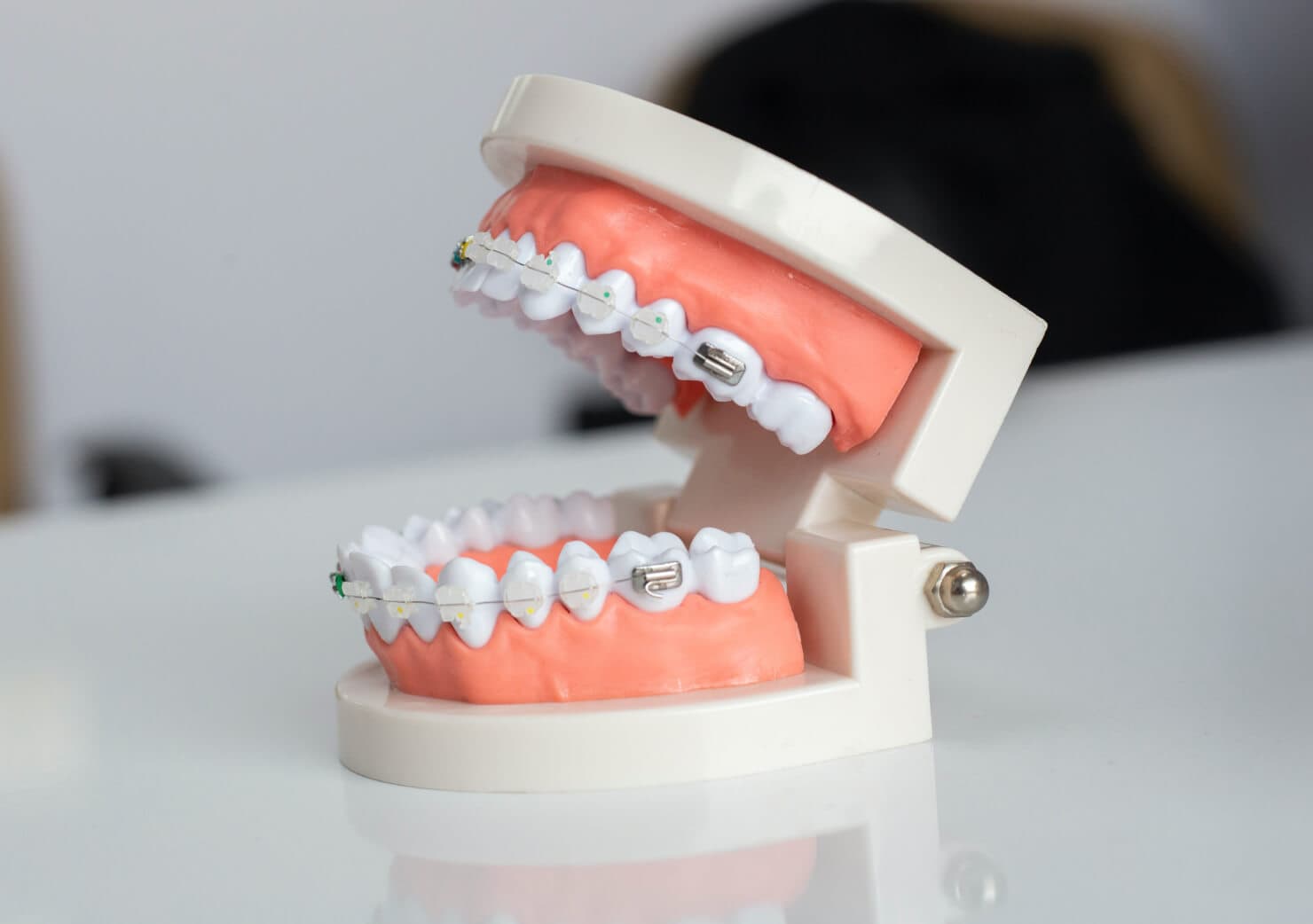
Fixed braces consist of brackets and a wire. The wire connects the brackets, which are attached to the teeth with a special adhesive. The wire creates orthodontic force through its elasticity, and that force gradually moves and straightens the teeth.
The force applied depends on the properties of the wire: its shape, its thickness and its material. Older brackets were made of metal. Increasingly we see ceramic and white composite brackets instead. White brackets look better because they match the colour of the teeth, and the newer kind are more comfortable and give faster, better results.
How fixed braces work
Teeth can change position as required, but they need a period of adjustment. Pain is not unusual, though it passes. Patients may also notice the teeth feeling loose. There is no need to worry: all of that is a normal part of treatment.
If a bracket comes off, treatment has stopped, so it needs re-attaching as soon as possible. Check-ups are usually monthly, and a patient can book more often if needed.
How long treatment takes depends on several factors: mostly on how severe the irregularity is, and on how well the patient follows the treatment. Good conditions speed up the correction and make the appliance more effective.
Oral hygiene while wearing fixed braces
Hygiene is one of the more important factors while fixed braces are worn. What is expected of the patient is daily cleaning and brushing after every meal. Alongside an ordinary toothbrush it is worth using additional brushes: a sulcus brush and an interdental brush as well as the standard one.
If a patient does not keep both teeth and appliance clean, permanent damage to the teeth and the gums can follow.
Diet while wearing fixed braces
Diet matters a great deal for keeping the teeth clean while braces are worn. It also matters for the appliance itself, which certain foods can damage.
Food to avoid includes:
- Hard sweets
- Caramels
- Chewy sweets
- Stone fruit
- Chewing gum
- Walnuts
- Hazelnuts
- Hard biscuits
- Almonds
It is also worth not biting into an apple. The apple itself is not the problem; biting into it is. Peel and slice it and there is no difficulty. Very hard food is best avoided altogether, and if it cannot be, bite and chew very carefully.
It helps to change the diet as far as possible towards softer food, or food that is easier to chew: yoghurt, soup, pasta, eggs, boneless fish, cooked vegetables, purée, bananas and soft bread.
Metal braces
Metal or steel braces are the standard choice of appliance. They straighten teeth quickly and effectively. They are also flexible, in that their appearance can be varied.
Braces can be very unpopular with teenagers, so how they look matters. For younger children the colour of the brackets and the ligature elastics can be changed at every appointment, which creates an entirely new look each time — something the youngest patients often enjoy.
Invisible fixed braces
Invisible, or aesthetic, fixed braces are a good choice for anyone to whom the look of their teeth matters throughout treatment. That is usually the case for patients who deal with people or clients all day and for whom the appearance of their smile matters.
There are two kinds of aesthetic brace in common use: ceramic, and sapphire glass. Both work equally well and look good while worn. Both blend completely with the colour of the teeth, which is what makes them invisible.
After fixed braces come off
After a certain time the braces come off. The orthodontist then fits retainers, which have to be worn for a period. Retainers are clear trays, barely noticeable, that hold the result the braces achieved.
There are also fixed retainers, attached to the inside of the teeth. Retainers stabilise the ideal position and stop the teeth drifting out of line again after treatment. They are used after any successful course of fixed braces, whatever the type of appliance or method of straightening.
Book an examination
A first examination is not charged for. You choose an appointment online, in a few steps, or call us.