Dental prosthetics
Dentures
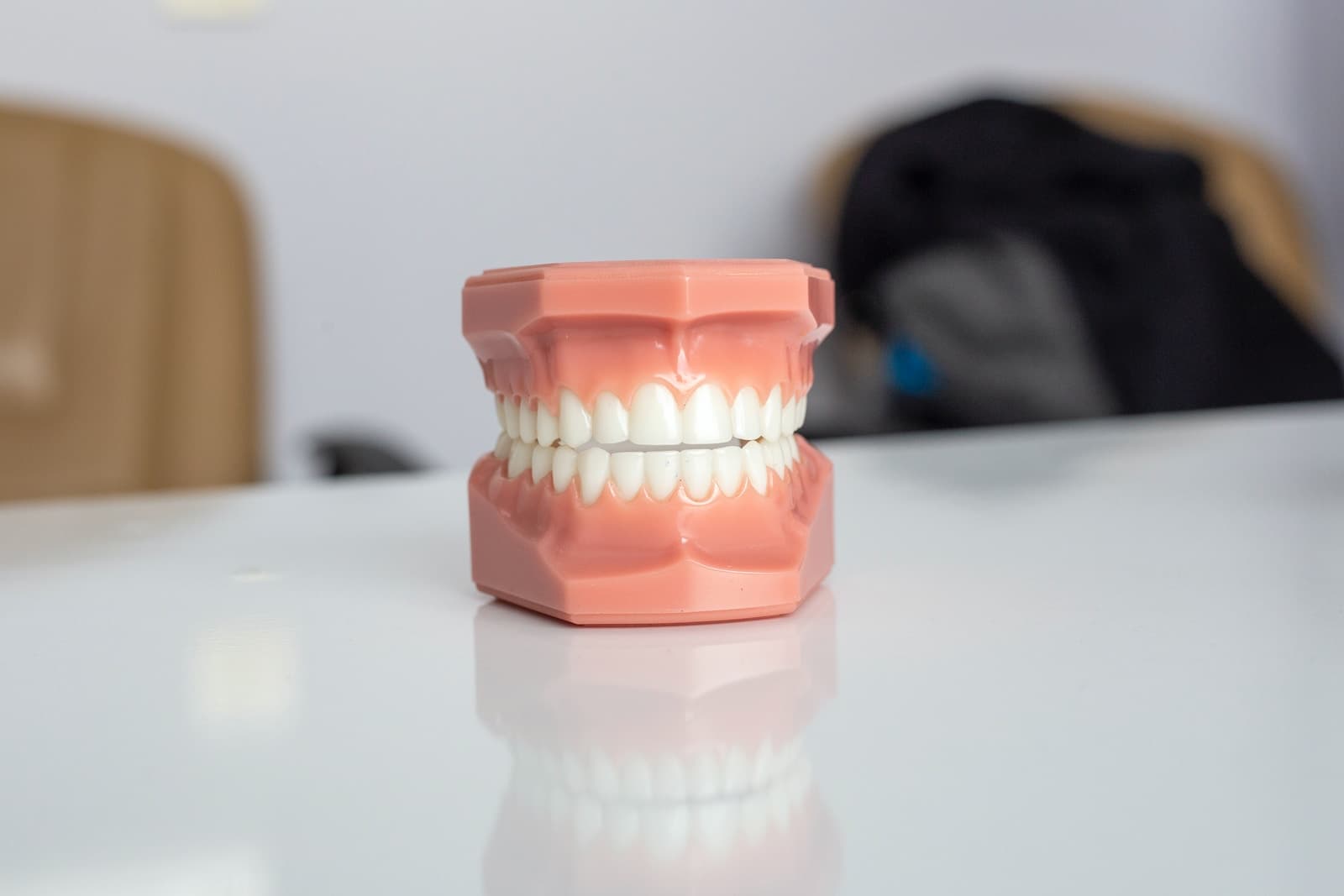
A denture replaces teeth that are no longer there — all of them in a jaw, or only some. Dentures differ in what they are made of and what they rest on, and that decides both how comfortably they are worn and what they cost.
When a denture is made
When so many teeth are missing that the remaining ones cannot carry a bridge, or when a jaw has no teeth at all. A denture rests on the mucosa and on the remaining teeth, and the patient takes it out and puts it back; that is what sets it apart from fixed work, which stays cemented in place. The difference from fixed work is explained in a separate article.
The choice is not made from a list of materials but from the state of the mouth: how many teeth are left, where they are, what the ridge is like and what the bite is like. So the plan is made after an examination and an impression, not in advance.
Types
- Full acrylic: when a jaw has no teeth at all; it rests on the ridge and the palate.
- Partial acrylic: replaces some of the teeth and rests on the remaining ones with clasps.
- Cast metal framework: a metal base instead of a full acrylic plate; it is thinner and covers less of the palate.
- Framework with attachments: hidden connectors on the remaining teeth instead of visible clasps.
- Flexible: made of a pliable material, with no metal clasps.
A framework denture is thinner because metal takes the load at a smaller thickness than acrylic. In the upper jaw that means less of the palate is covered, so taste and warmth come through better. The price follows the making: a metal base is cast in the laboratory and takes more steps.
How it is made
- Examination, X-ray and plan: what comes out, what stays and what carries the denture.
- Impressions of both jaws; for a framework denture, the rests on the remaining teeth are prepared.
- Recording the bite: how the upper and lower jaw meet when the mouth closes.
- A wax try-in: the shape, shade and position of the teeth can be seen and changed before the denture is made.
- Fitting the finished denture and adjusting any places that press.
The laboratory works between the steps, so making a denture usually takes a few weeks. Adjustments in the first days are part of the work, not a sign that something is wrong: the mucosa settles over several days, and only then does it show where the denture presses.
The first weeks
At first a denture feels large and changes speech; that passes within a few days with practice, most easily by reading aloud. It is easier to start with softer food cut into smaller pieces and gradually return to what you are used to.
If a denture rubs somewhere, do not grind it at home: bring it as it is, because the mark of the pressure shows the exact spot. A denture that has been ground down no longer shows where it was catching.
Care and repairs
A denture is washed after meals with a brush and soap or a denture cleaner — not with toothpaste, which is abrasive and leaves scratches that deposits cling to. At night it sits in clean water or dry, as instructed.
After extractions the jaw changes over the years and the denture stops seating properly; it is then relined rather than remade. A broken denture or a tooth that has come off is repaired; those are separate items in the price list and take less time than making a new one.
- How long does one denture last?
- It depends on changes in the ridge and on care. Relining extends its life, and a check-up once a year shows when it is due.
- Are the clasps visible?
- On a partial acrylic denture they can be, depending on where the teeth are. A framework with attachments and a flexible denture are the options without visible metal clasps.
- Can a denture rest on implants?
- It can; it then sits more firmly, because it rests on bone as well as on mucosa. That is a separate plan and a separate price; about implants is in its own article.
- What if I do not like how it looks?
- That is what the wax try-in is for: the shape, shade and position of the teeth are seen and changed then. Once it is made, changes are limited, so the try-in is the moment to say what bothers you.
Related to this treatment
Next step
What you need is decided at an examination
This text is for information and does not replace an examination. After one you know the plan, how long it takes and what it costs, before anything begins.