What it covers
Oral surgery covers procedures that require an incision, a suture or work in the bone: extraction of teeth and retained roots, surgical removal of impacted wisdom teeth, apicectomy — removal of the root tip together with the lesion around it — treatment of dry socket, and minor gum procedures.
Extraction is always the last option. Before it we look at whether the tooth can be saved by root canal treatment, a build-up or a crown, and the judgement is made on the X-ray and the state of the bone.
When a procedure is needed
- A tooth destroyed to the point where there is nothing to hold a filling or a crown.
- A wisdom tooth that cannot come through properly, pushes the neighbouring tooth or keeps getting infected.
- A lesion at the root tip that does not clear even after root canal treatment.
- A retained root under the gum.
- Preparing the jaw before a denture or before an implant.
What the procedure is like
The procedure starts with an X-ray and a plan: the position of the roots and the proximity of nerves and the sinus. It is done under local anaesthetic, which is checked before we begin. A simple extraction needs only an instrument to free the tooth and lift it out.
Surgical extraction, which wisdom teeth often require, means an incision in the gum, sometimes removing a small amount of bone, and dividing the tooth so that it comes out without straining its surroundings. Sutures follow, removed after seven to ten days.
An apicectomy is done when a lesion remains at the root tip. It is approached through the gum: the root tip is removed together with the lesion, and the canal is sealed from that side.
Recovery
For the first few hours it matters that the clot stays in the socket: do not rinse, spit, smoke or drink through a straw. A cold compress on the outside reduces swelling on the first day, and food should be soft and lukewarm.
Swelling and discomfort peak on the second day and then subside. Painkillers and, if needed, an antibiotic are prescribed by the dentist; do not take anything on your own initiative. If the pain gets worse on the third or fourth day instead of easing, it may be dry socket — get in touch, it is treated quickly.
Sutures are removed at a check-up. Until then the area is brushed gently, but it is brushed: a clean wound heals better.
What comes after an extraction
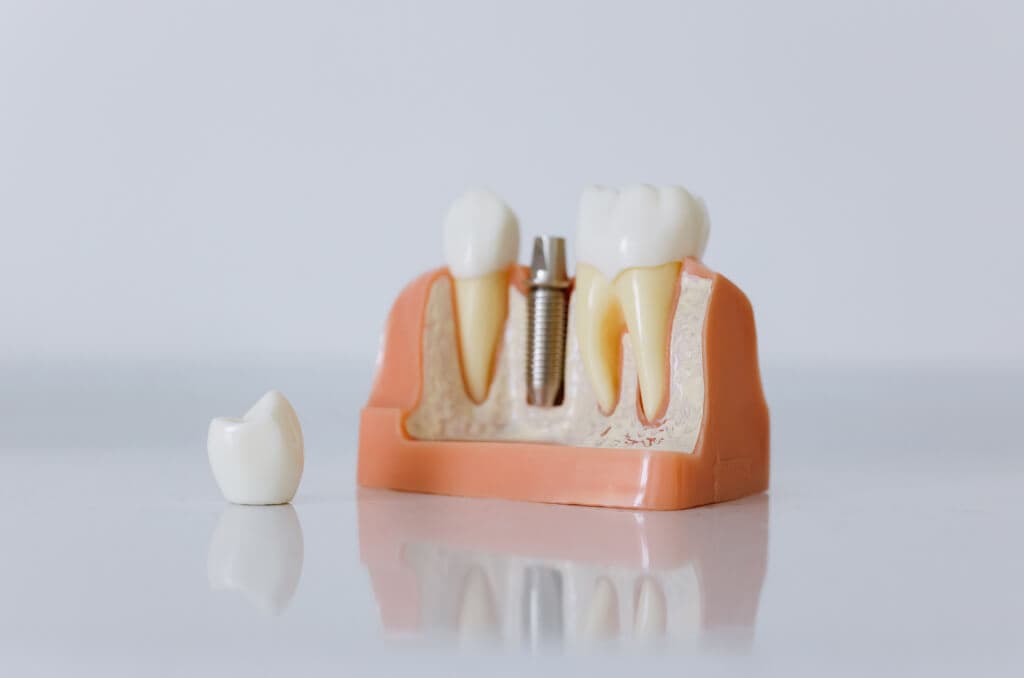
An empty space in the jaw is not harmless: neighbouring teeth tilt over time and the opposing one grows out. So a replacement — a bridge, a denture or a replacement on an implant — is planned as soon as the site has healed. We have written about implants separately.
Price
Anaesthetic, simple and complicated extraction, surgical removal of an impacted tooth, apicectomy and treatment of dry socket are in the “Oral surgery” group of the price list. For surgical procedures the price depends on the findings, so the price list marks it as a starting price.
- How long does removing a wisdom tooth take?
- A simple extraction is a matter of minutes; a surgical one usually takes longer and is planned as its own appointment. The length depends on the position of the tooth, which is seen on the X-ray.
- Can I drive after the procedure?
- After a local anaesthetic, usually yes, if you feel well. If you were given a sedative, no — arrange a lift in advance.
- How long does the swelling last?
- It is usually greatest on the second day and then subsides over several days. A cold compress on the first day helps.
- Do all wisdom teeth have to come out?
- No. A wisdom tooth that has come through properly, has its place in the bite and can be cleaned, stays. The one that causes trouble, or is clearly heading that way, comes out.