
share
Whitening is one of the most sought-after cosmetic dental treatments, letting people achieve a lighter, more attractive smile. Whether you are considering whitening at home or a professional treatment at the practice, it is worth understanding the benefits, the risks and the options open to you. This guide covers what you need to know, including the difference between whitening in the practice and at home, and the products worth using.
What is teeth whitening?
Whitening is a procedure that removes stains and discolouration from the surface of the teeth to achieve a lighter shade. It can be done in several ways, including professional treatment at a dental practice and home whitening kits. Given how popular a light smile is, there are many products on the market promising excellent results.
How does whitening work?
Whitening usually involves a peroxide (most often hydrogen peroxide or carbamide peroxide) that breaks down the stains on the teeth. During the treatment the active ingredient penetrates the enamel and breaks up the molecules causing the darker colour, making the teeth lighter. Whether it is done at home or at the practice the basic mechanism is the same; what differs is the concentration of the active ingredient and how quickly the result appears.
Whitening at the practice
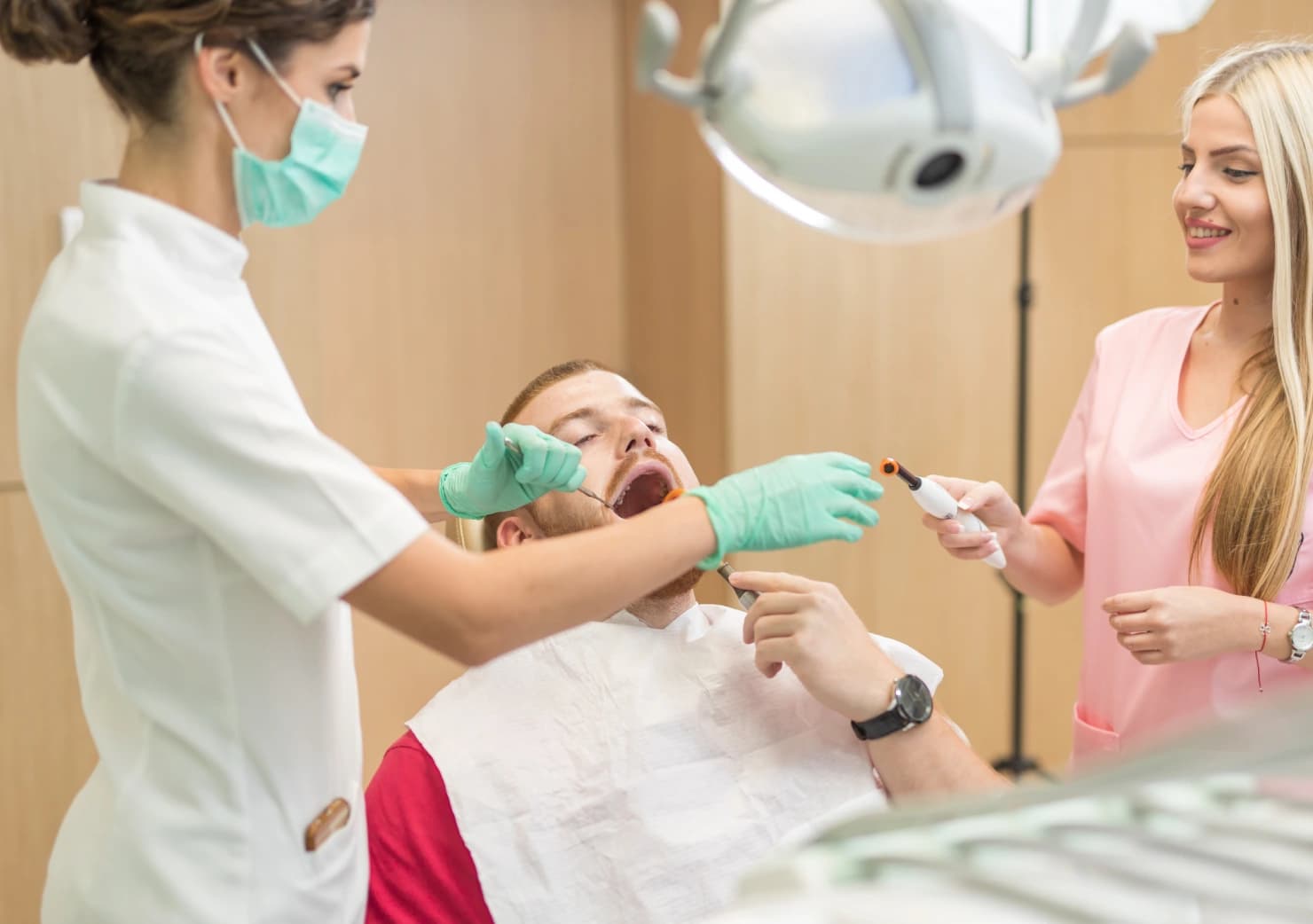
Whitening at the practice is a professional procedure carried out under the supervision of a qualified dentist. It uses highly concentrated whitening agents, which give fast and effective results.
Whitening at the practice usually involves these steps:
- Examination and preparation: the dentist first examines your teeth to assess their condition and decide whether you are a good candidate for whitening. Before the treatment begins the teeth are cleaned of plaque and tartar.
- Protecting the gums: to prevent irritation, the gums are covered with a protective gel or a special barrier.
- Applying the whitening agent: an agent with a high concentration of peroxide is applied to the teeth. In some cases light or laser technology is used to speed the process up.
- Checking and repeating: the treatment can last from thirty minutes to an hour, and in some cases the dentist may repeat it several times in the same session to reach the desired shade.
- Finishing: afterwards the dentist removes the agent and the gum protection, then applies a product that helps reduce sensitivity.
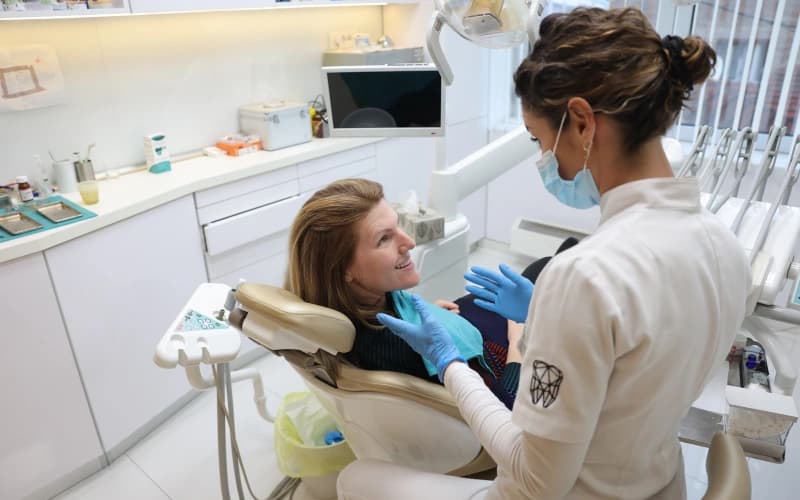
The advantages of whitening at the practice:
- Fast, visible results after a single session.
- Precise control over the process.
- Professional supervision, which minimises the risk of irritation or damage.
The best options for whitening at home
Home whitening is a practical and affordable alternative for anyone who wants lighter teeth without visiting a dentist. These methods are flexible and let you carry out the treatment at home, at a time that suits you. There are various products on the market, from strips and gels to whitening toothpastes. Each has its advantages and drawbacks, and the choice depends on what you want and what you want to spend.
With home whitening it matters to follow the instructions to get the best result. Home products usually have a lower concentration of the active ingredient than professional treatments, which means the results come gradually but are less aggressive. Patience is needed too: home whitening can take several weeks to reach the shade you want.
If you want to whiten your teeth at home, several popular products can help:
- Whitening strips: simple to use, and they give good results after a few weeks.
- Whitening gel: gels, often with an applicator or trays, allow precise application and can give a more even result.
- Whitening toothpaste: a simple way of maintaining the colour day to day.
The difference between whitening at the practice and at home
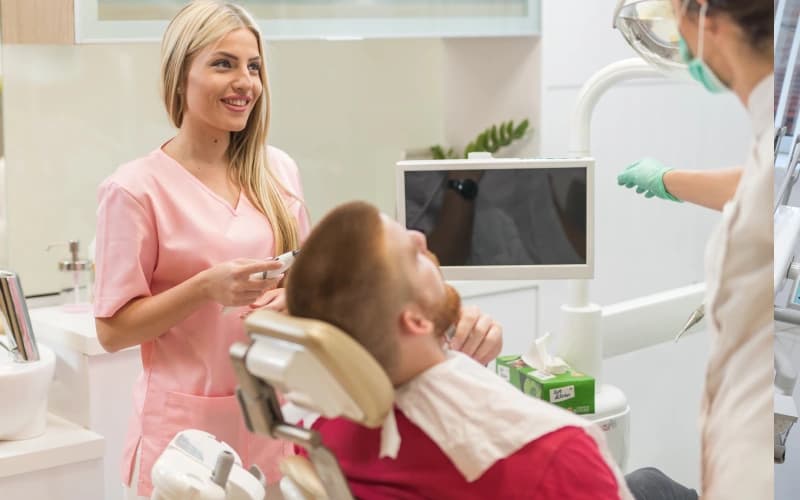
It is worth understanding the difference between the professional and the home methods. Whitening at the practice is more effective and gives faster results, while home methods offer more flexibility and cost less. The table below sets out the main differences so you can decide which suits you.
Whitening at the practice compared with whitening at home:
| Feature | At the practice | At home |
| Results | Fast, visible after one session | Gradual, several treatments needed |
| Length of treatment | 30-60 minutes per session | 7-14 days, depending on the product |
| How long it lasts | 1-3 years with proper care | 6 months to 1 year |
| Price | 18,000 RSD | 12,000 RSD |
| Tooth sensitivity | Can cause temporary sensitivity | Less marked, but possible |
| Professional supervision | Yes | No |
| Convenience | Requires a visit to the dentist | Can be done at any time |
As the table shows, the choice between whitening at the practice and at home depends on your needs, your budget and your expectations about how fast the result comes and how long it lasts.
Whitening: things you may not have known
Whitening teeth is a practice centuries old, but modern treatments have brought new information and some interesting facts. Here are a few you may not have known:
- The ancient Egyptians used whitening agents: one of the earliest methods dates from ancient Egypt, where people used a mixture of pumice and wine vinegar to clean and lighten their teeth.
- Natural ingredients as whiteners: bicarbonate of soda, lemon juice and activated charcoal are among the natural ingredients people still use for mild whitening at home.
- Professional whitening can last years: looked after properly, the results of professional whitening can last several years, which makes it a long-lasting answer to a stained smile.
- Enamel does not regenerate: whitening can make your teeth lighter, but the enamel that protects them cannot regrow. That is why following the dentist's advice, and not overdoing the treatments, matters.
- Genetics plays a part: the colour of your teeth is partly genetic. Some people naturally have darker enamel and others lighter, and that affects the result.
Common questions about whitening
Whitening raises plenty of questions, particularly about choosing between the methods and understanding the possible risks. Here are answers to the ones asked most often, to help you decide.
- How does whitening work?
- Whitening can be done professionally at a dental practice or with a home kit. The process usually uses a peroxide that breaks down stains on the teeth, giving a lighter shade.
- Is whitening harmful?
- Whitening is generally safe, but it can cause temporary tooth sensitivity or gum irritation. It is worth talking to a dentist before starting any treatment.
- What does whitening cost?
- The price varies with the method. Professional whitening at the practice costs more; home products are cheaper but take longer to reach the result you want.
- How long does the effect last?
- That depends on how you look after your teeth afterwards. The results of professional whitening usually last from several months to several years, with good oral hygiene and by avoiding staining food and drink.
- Can I use whitening strips?
- Whitening strips are a simple and popular way of lightening teeth at home. Follow the instructions to get the best result and avoid side effects.
In summary
Whitening is a good way of freshening your smile and your confidence. Whether you choose professional whitening at the Jordačević dental practice in Niš or want to try a home product, it is worth being informed about the process, the benefits and the risks. Always talk to a dentist to choose the option that suits you.