
share
Brushing is the best protection against plaque bacteria, tartar, periodontal disease and much else that follows poor oral hygiene. Brushing with a toothbrush is only the basic step, though; several more are needed to reach a satisfactory level of protection.
Alongside the brush itself you need a suitable toothpaste. What made the greatest difference to oral hygiene, though, was floss and the interdental brush.
An interdental brush does a good deal an ordinary brush cannot. Since food lodges in places that are very hard to reach, an interdental brush is the best answer for cleaning teeth thoroughly and properly.
What is an interdental brush?
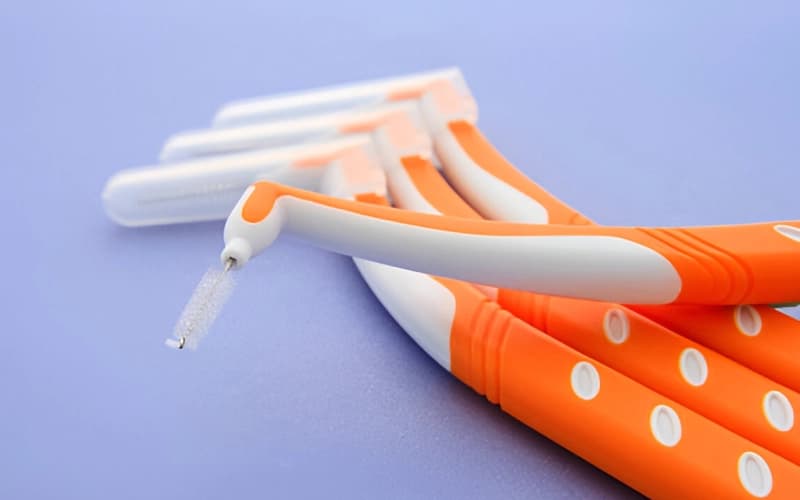
An interdental brush is a slim brush, usually round or tapered, with short bristles at the tip. Some have small or specially shaped handles for easier use; others have longer handles resembling an ordinary toothbrush.
Combined with floss, interdental brushes clean the spaces between the teeth best, because they reach the parts an ordinary brush cannot. They are best for cleaning between molars, under bridges, around a crown, or after gum surgery.
How do you use an interdental brush?
Alongside brushing with an ordinary toothbrush, it is advisable to use an interdental brush at least once a day. Bacteria are most active at night while we sleep, so cleaning thoroughly before bed matters most, and a brush of this kind makes sure you go to sleep with no deposits on your teeth.
Which brush you need depends on the spaces between your teeth and on how they sit. Since there are several sizes for different gaps, you may need to buy and use more than one at a time.
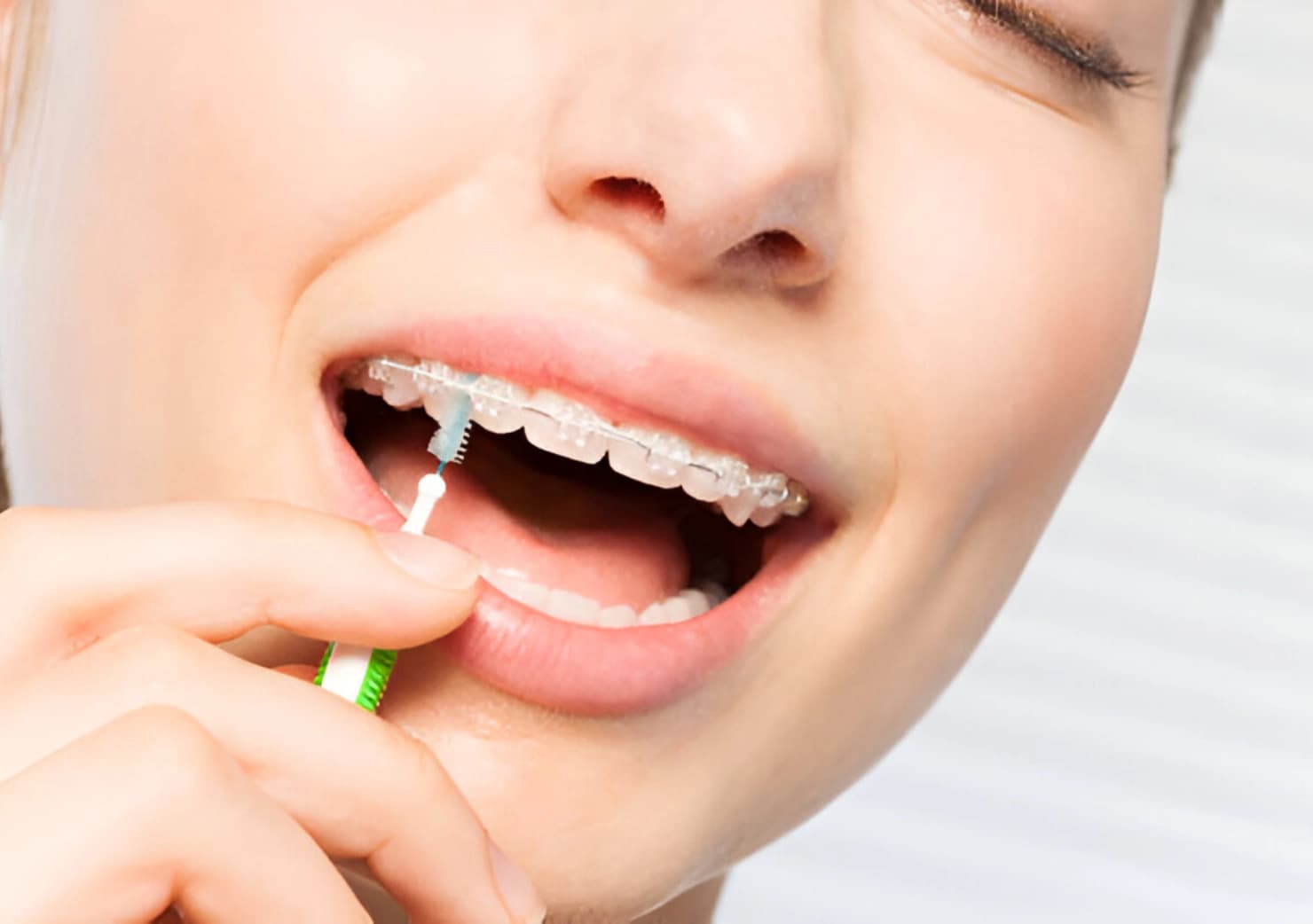
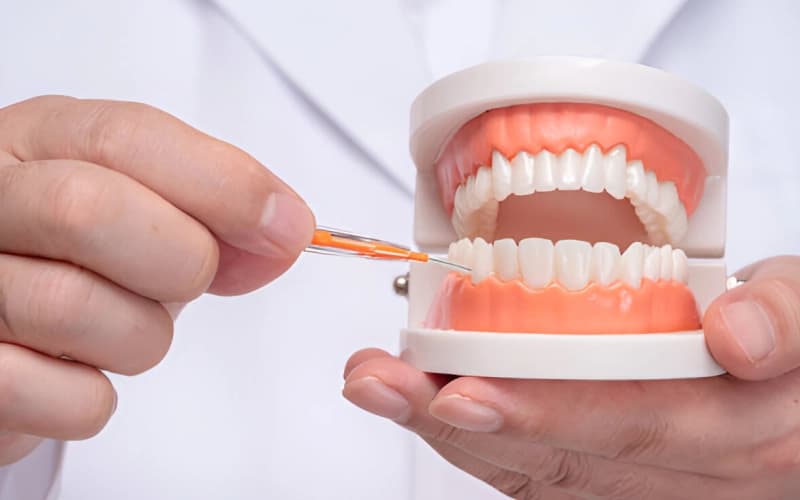
Insert the brush very gently into the space between the teeth. Then clean the space with gentle, circular movements. It matters not to use too much force, so that neither the gum nor the tooth is damaged.
When are interdental brushes recommended?
Interdental brushes have become popular for what they do, but they are not recommended for everyone. If your teeth are so tightly packed that even floss will not pass, a brush certainly will not, and using one is not advisable — it can do more harm than good.
There are, however, clear situations where a dentist recommends them:
- If you wear fixed braces: cleaning with an ordinary brush while wearing braces is awkward and imprecise. It cannot reach every part, and it generally leaves the feeling that food is trapped between the teeth and the appliance. Interdental brushes solve that, cleaning thoroughly and reaching the difficult places.
- If you have larger gaps between your teeth: where an ordinary brush cannot clean a wide gap properly, an interdental brush is the answer. Sometimes the shape of the gap makes a brush awkward, in which case it is better to combine the brush with floss.
- If you dislike using floss: many people find floss difficult and awkward, and dislike how it feels. For them an interdental brush is the best alternative and the most practical answer.
How do you choose an interdental brush?
Interdental brushes come in different sizes and shapes, which lets you choose the right one for your needs and clean between the teeth as effectively as possible. There is no universal rule and no universal brush, so it is best to ask a dentist, who will advise you on the size and type to use.
If you would rather try for yourself, buy several sizes and test them to see which suits you. If your gums are inflamed, take the thinnest. If you have bridges, crowns or missing teeth, it is sensible to buy a full set of sizes and use whichever fit best.
Gums often bleed the first few times you use a brush of this kind. That is entirely normal and no cause for concern; it lessens and stops within a few days. Once you are cleaning properly you remove the source of the infection, and the bleeding stops with it.
Even with frequent use of an interdental brush alongside floss and an ordinary brush, regular dental visits still matter. It is sensible to have your cleaning checked by a dentist or hygienist from time to time, to confirm it is doing what it should.
Every mouth is different, and so is every tooth, so what applies to someone else will not apply to you — neither the size of brush nor how it is used. Cleaning has to be tailored to age, ability and anatomy. Perfect brushing is also not something you can learn from reading about it, which is why the dentist's part matters here.
Interdental brushes: things you may not know
Interdental brushes have a long history and a number of interesting facts attached to them. From how they developed to modern refinements, these small brushes have proved central to the advance of oral hygiene. Here are a few things that help explain why they matter so much:
- The first interdental brush was patented in 1930: although various tools had been used earlier for cleaning between the teeth, the modern interdental brush as we know it was patented almost a century ago.
- They are made of various materials: interdental brushes can be made of nylon, silicone and even biodegradable materials, which makes them more environmentally friendly.
- They come in different sizes and shapes: from tapered to cylindrical, interdental brushes are designed to fit different gaps between teeth, which is what makes thorough cleaning possible.
- Using interdental brushes can reduce the risk of gum disease by as much as 50%: studies have shown that regular use significantly reduces plaque accumulation and the risk of developing periodontal disease.
- They are not only for teeth: these brushes are also useful for cleaning fixed braces, bridges, crowns and implants, which makes them a versatile tool for different needs.
Common questions about interdental brushes
Interdental brushes are increasingly popular for how effective they are. Here are answers to the questions asked most often about using them and about their advantages.
- What are interdental brushes for?
- Interdental brushes are small brushes designed to clean the spaces between the teeth, where an ordinary brush cannot reach. They effectively remove plaque and food debris, helping prevent decay and gum disease.
- How do I choose the right interdental brush?
- It matters to choose one that fits the gaps between your teeth. Different sizes and shapes allow cleaning to be tailored. Ask your dentist to help you choose the right size for your needs.
- How often should I use an interdental brush?
- At least once a day, ideally before bed, so that your teeth are entirely free of deposits and food debris.
- Can an interdental brush damage the gums?
- Used properly, it should not. It matters to use gentle, circular movements and to avoid excessive pressure, so the gum tissue is not damaged.
- What if an interdental brush will not pass between my teeth?
- If the gap is too small, the brush may not pass. In that case floss or other methods may be more effective. Always ask your dentist about the best option.